Close to Kota
A Hadoti weekend, not a lottery queue
Stay in Kota, take a gypsy at dawn, and be back for lunch. You do not need a Ranthambore core-zone draw to see real dry forest, cliffs and deer.
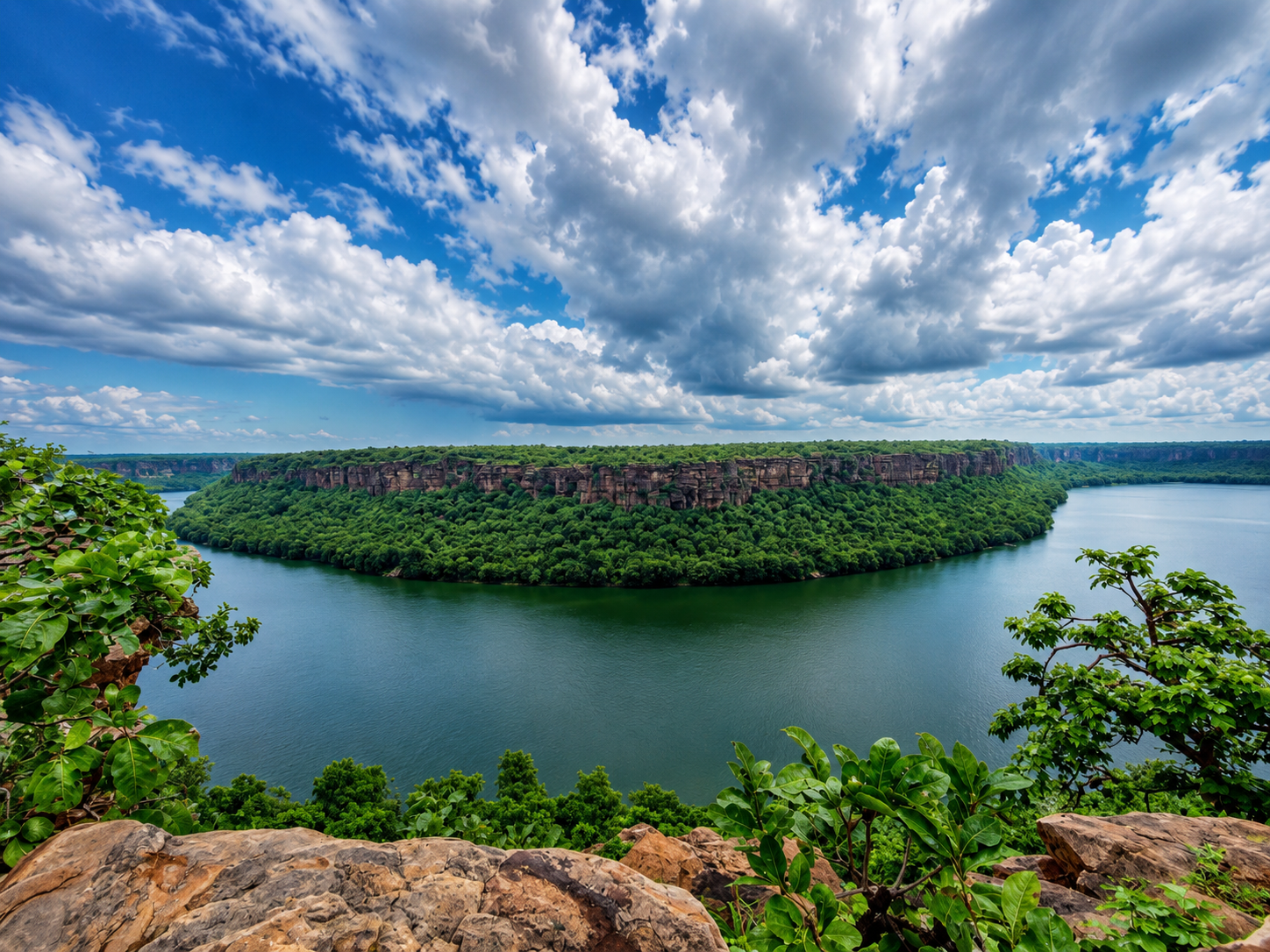
Mukundra Hills Tiger Reserve · Kota
Vindhyan hills, dhok forest and the Chambal horseshoe at Garadia — not an African postcard. Open gypsy, forest guide, no guaranteed tiger.
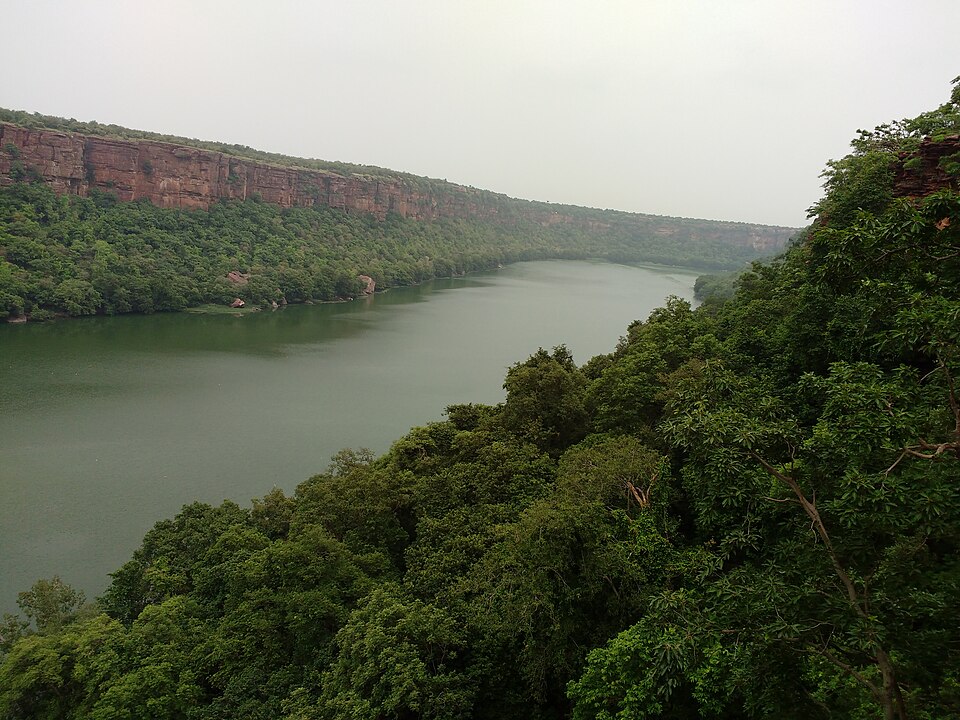
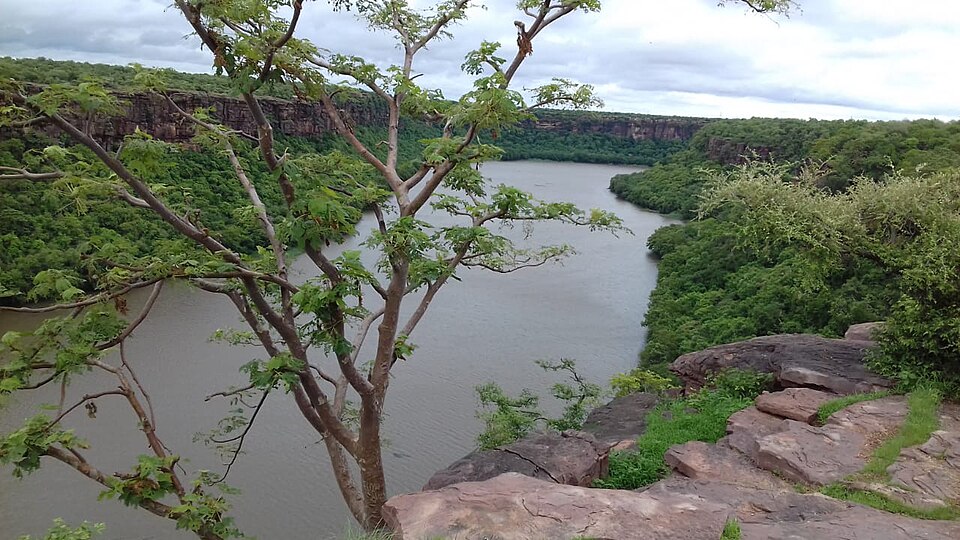
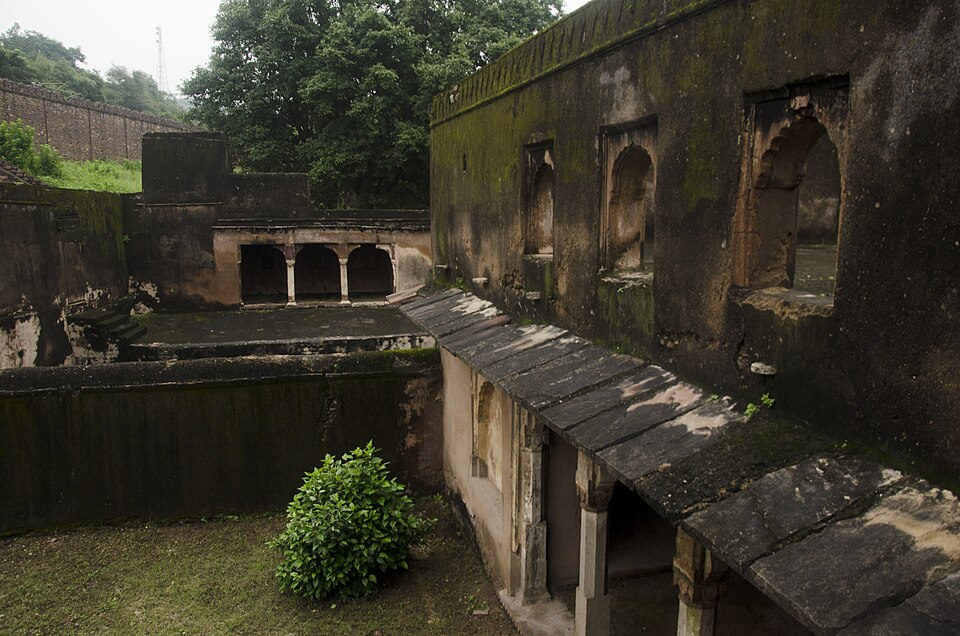
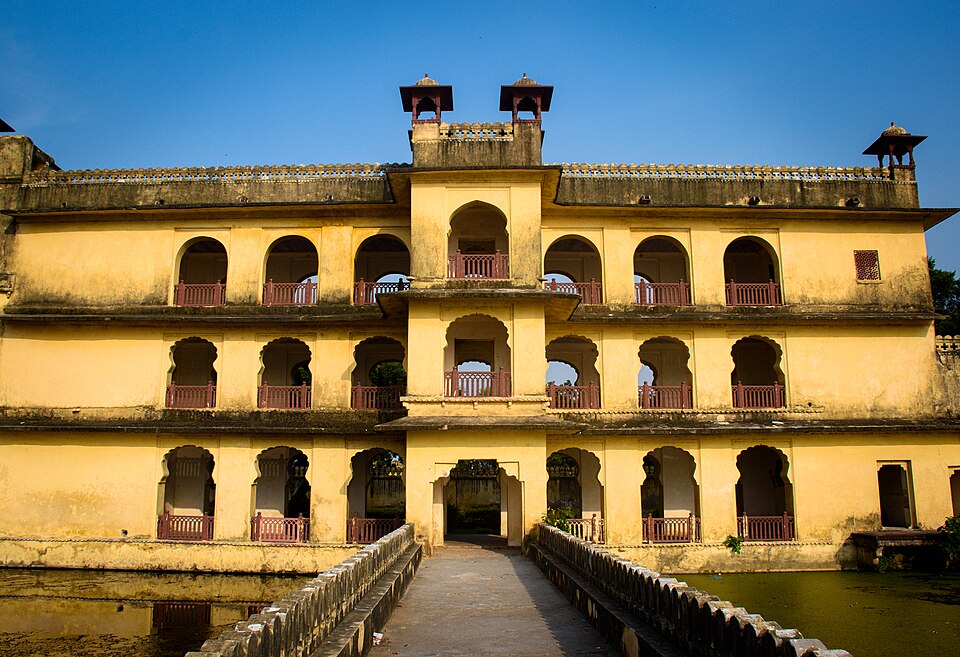
Photographs of this landscape: Garadia and the Chambal gorge, Mukundra forest ruins, and Kota’s Abheda Mahal. Wildlife portraits elsewhere are of the recorded species — not a promised sighting.
Mukundra Hills Tiger Reserve was constituted in 2013. It covers 759.99 sq km across Kota, Bundi, Chittorgarh and Jhalawar — two parallel Vindhyan hills, 80 km from the Chambal towards the Kalisindh. Darrah, Jawahar Sagar and a stretch of National Chambal Sanctuary sit in the core. For Kota, this is the forest you can actually reach before first light.
Close to Kota
Stay in Kota, take a gypsy at dawn, and be back for lunch. You do not need a Ranthambore core-zone draw to see real dry forest, cliffs and deer.
Honest landscape
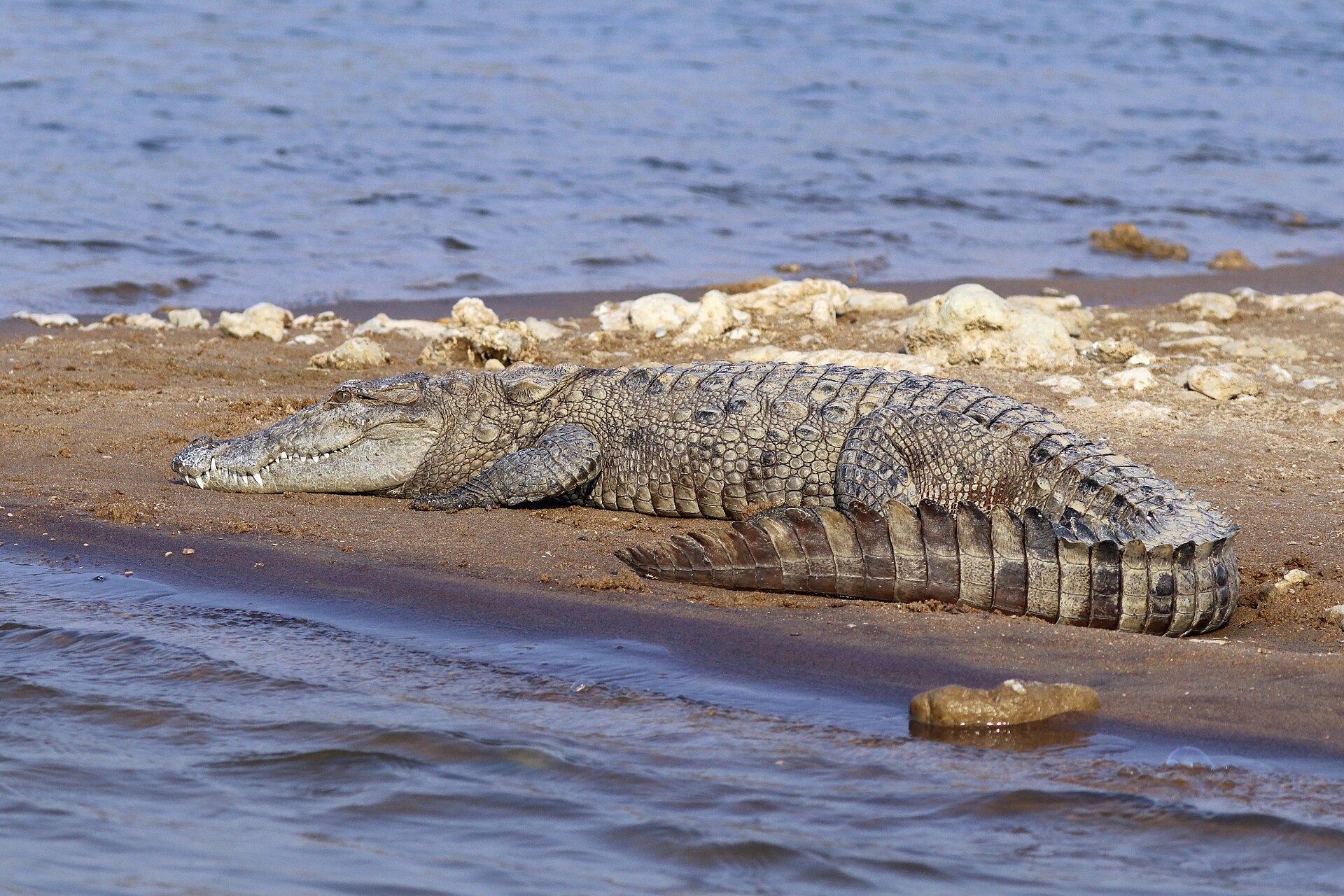
Champion & Seth dry deciduous forest: dhok, khair and salai on rocky slopes. Garadia cliffs look into mugger and gharial water. Stay behind the railings.
Open gypsy
Morning 6:00 AM – 10:00 AM and evening 2:30 PM – 6:00 PM. Indicative full gypsy ₹4,500. Confirm the live Forest Department fee.
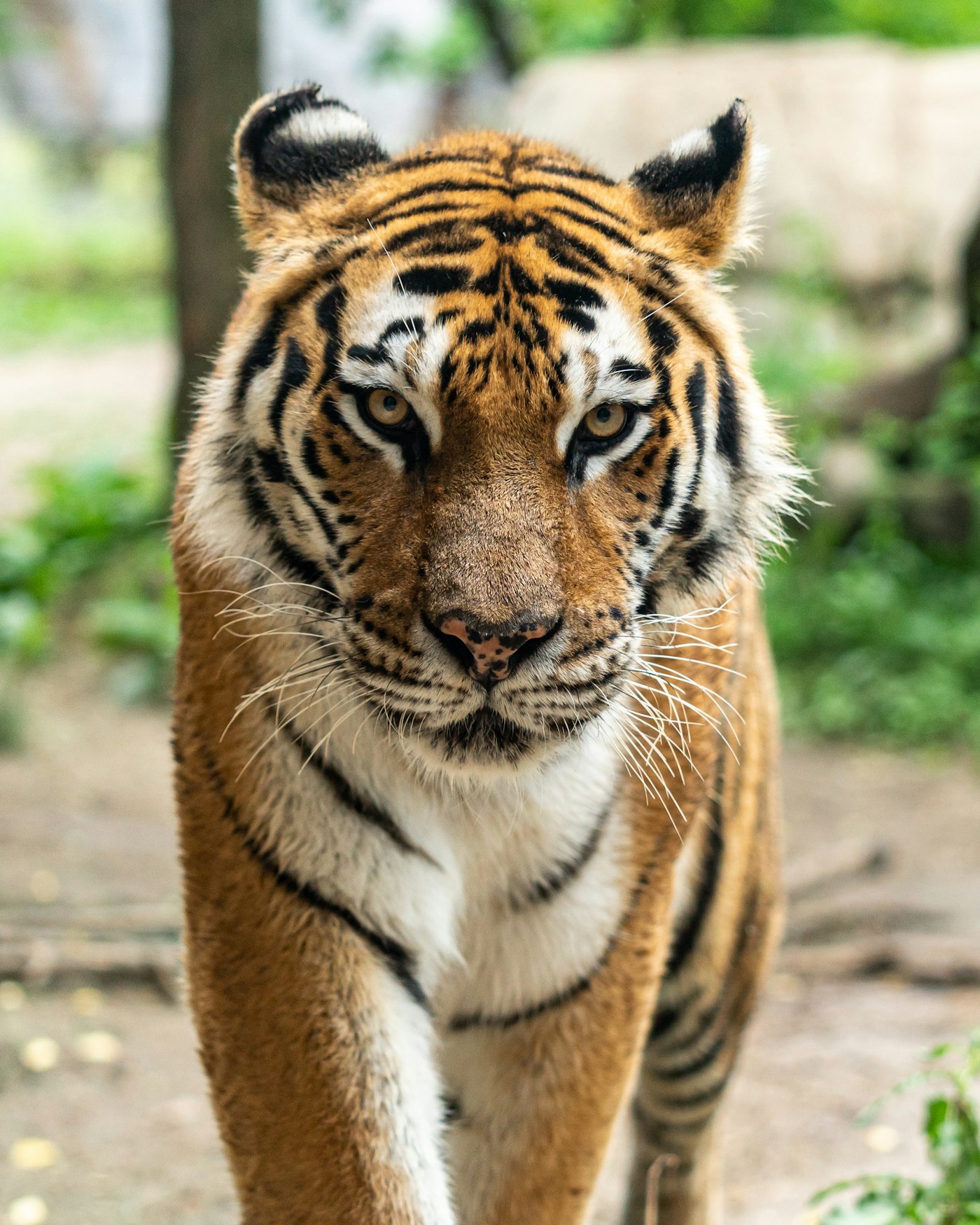
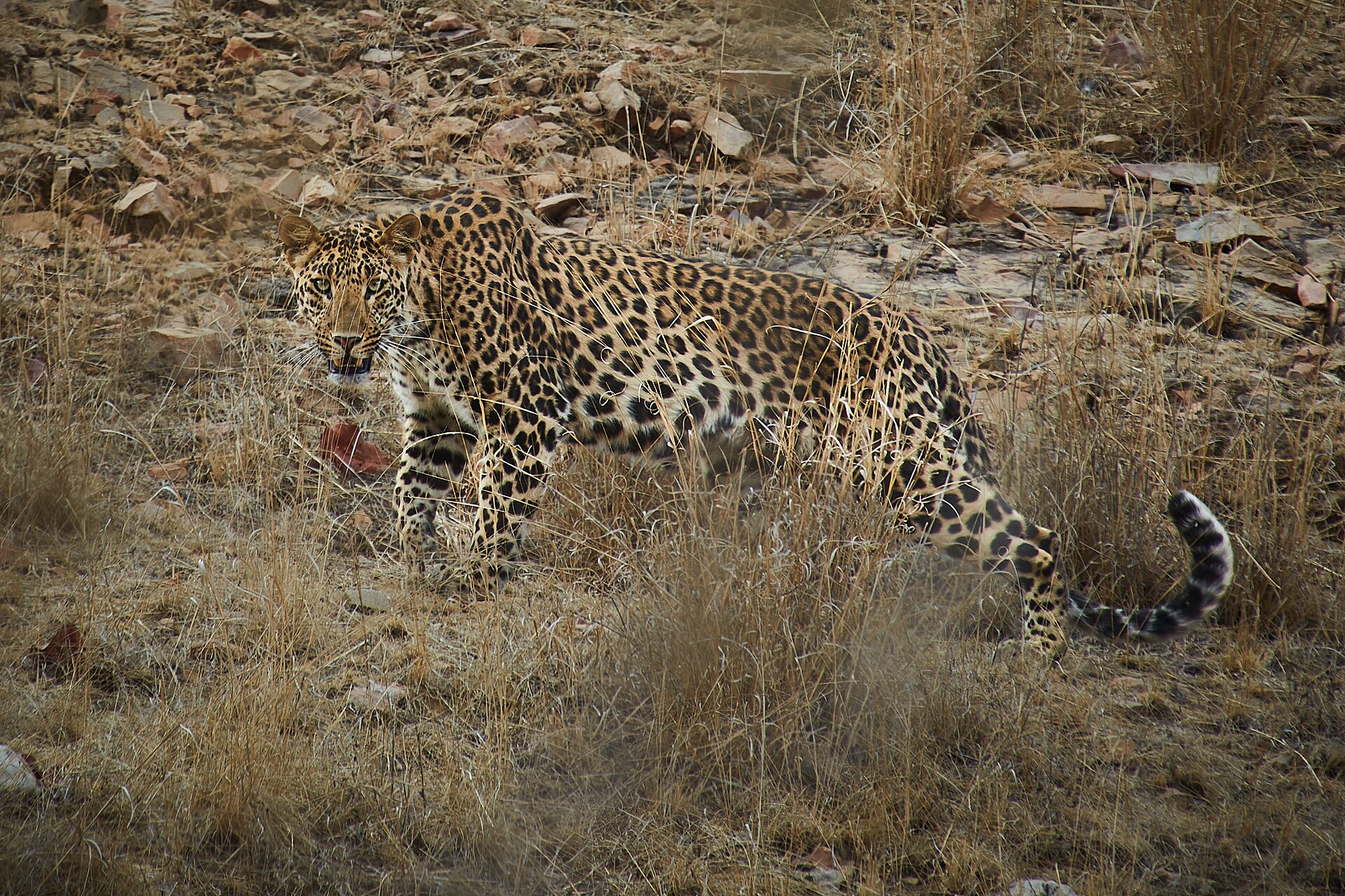
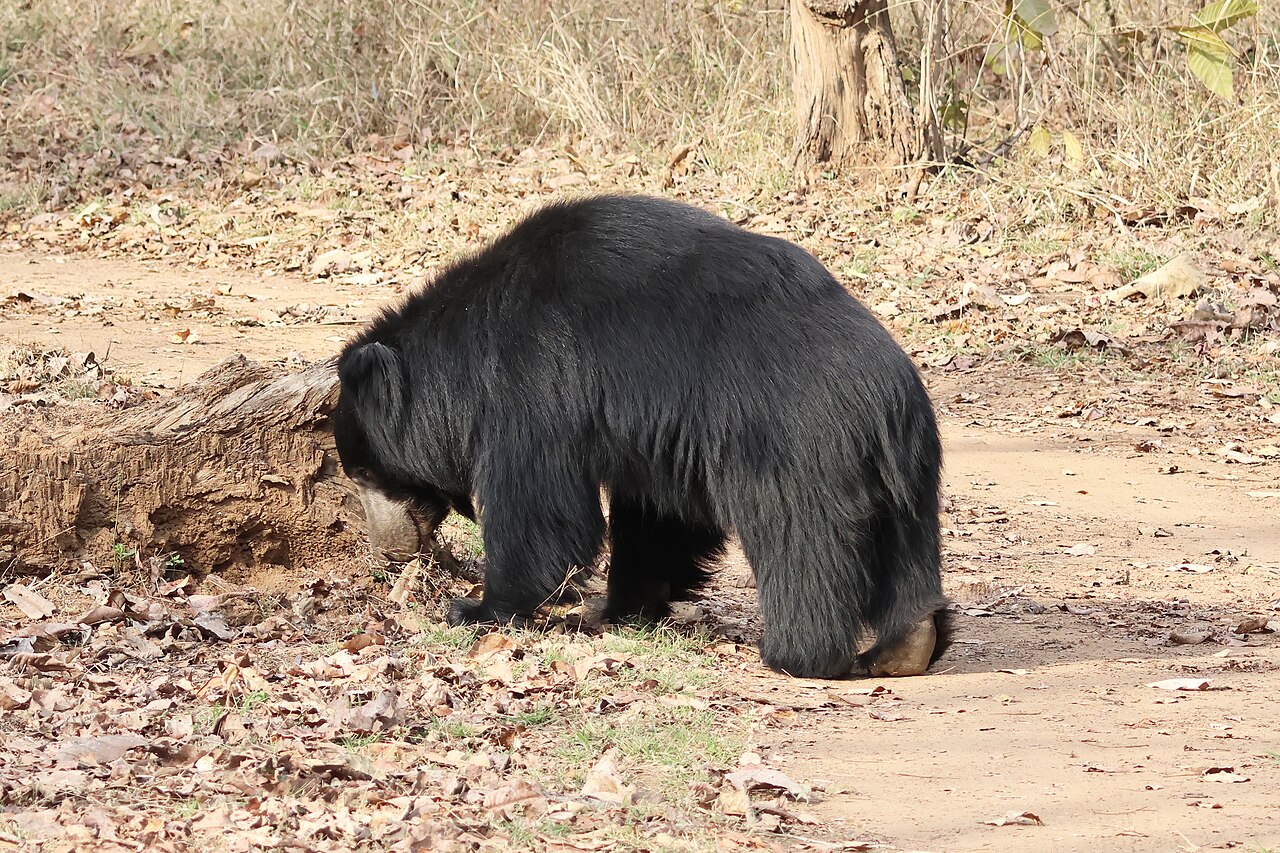
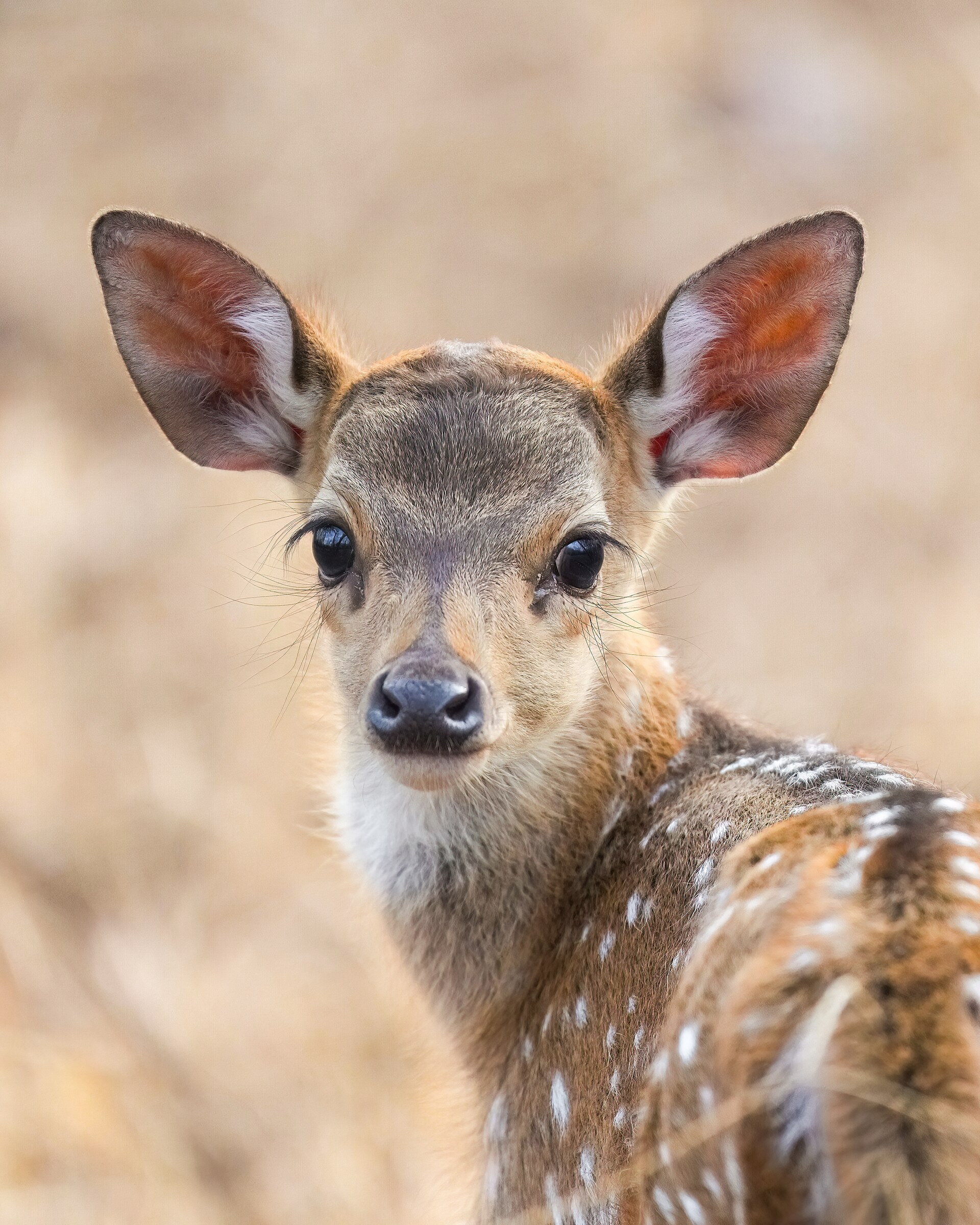
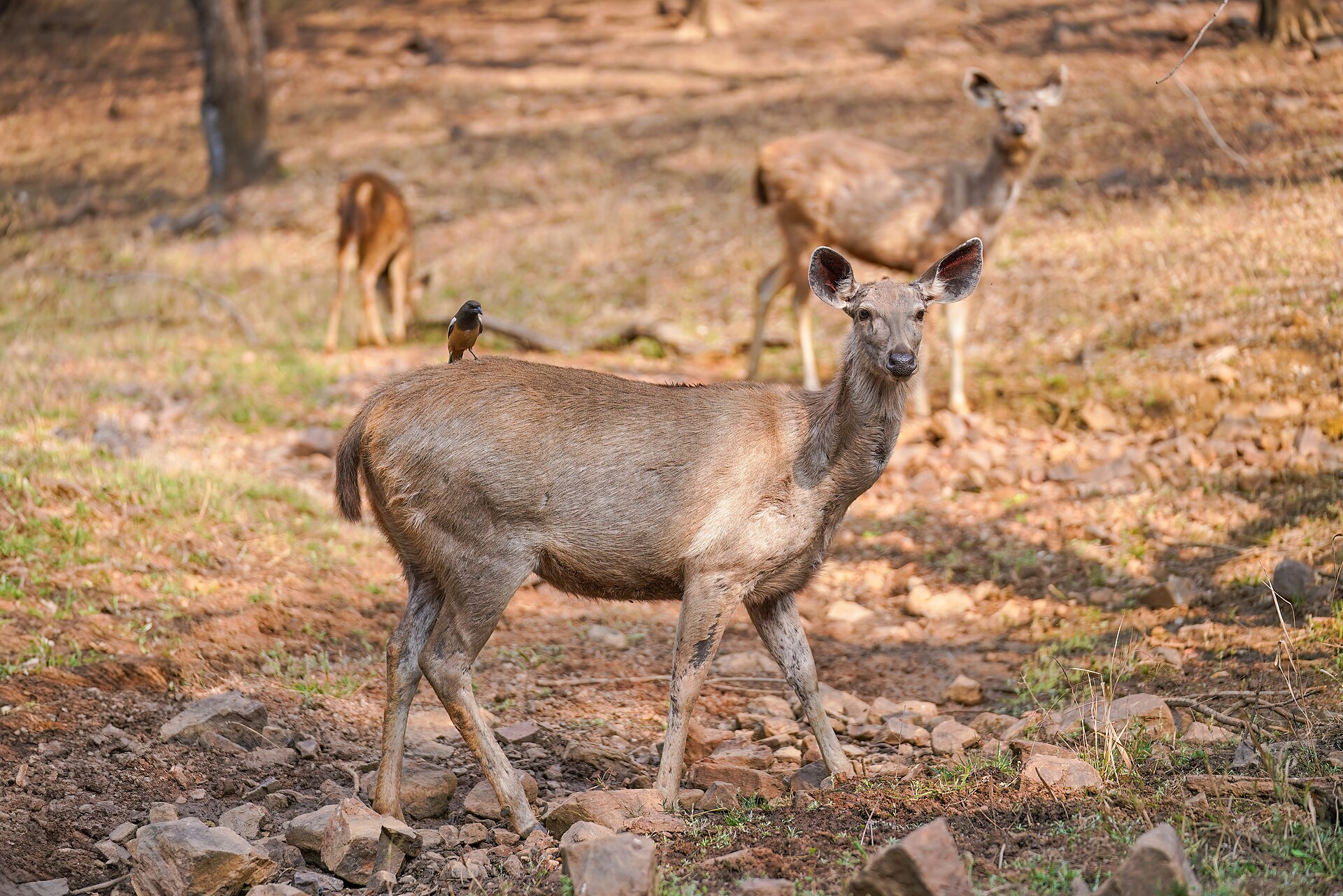
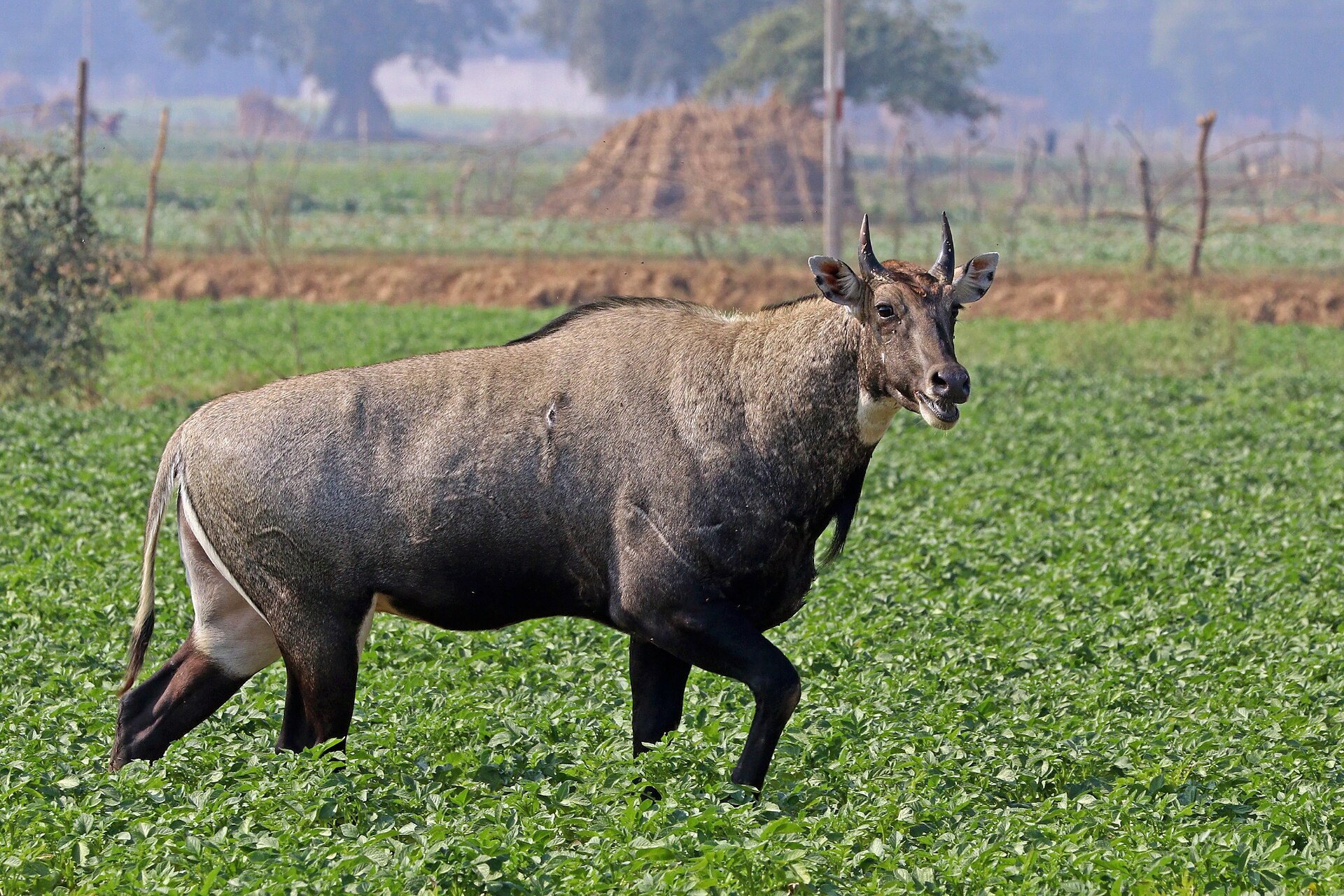
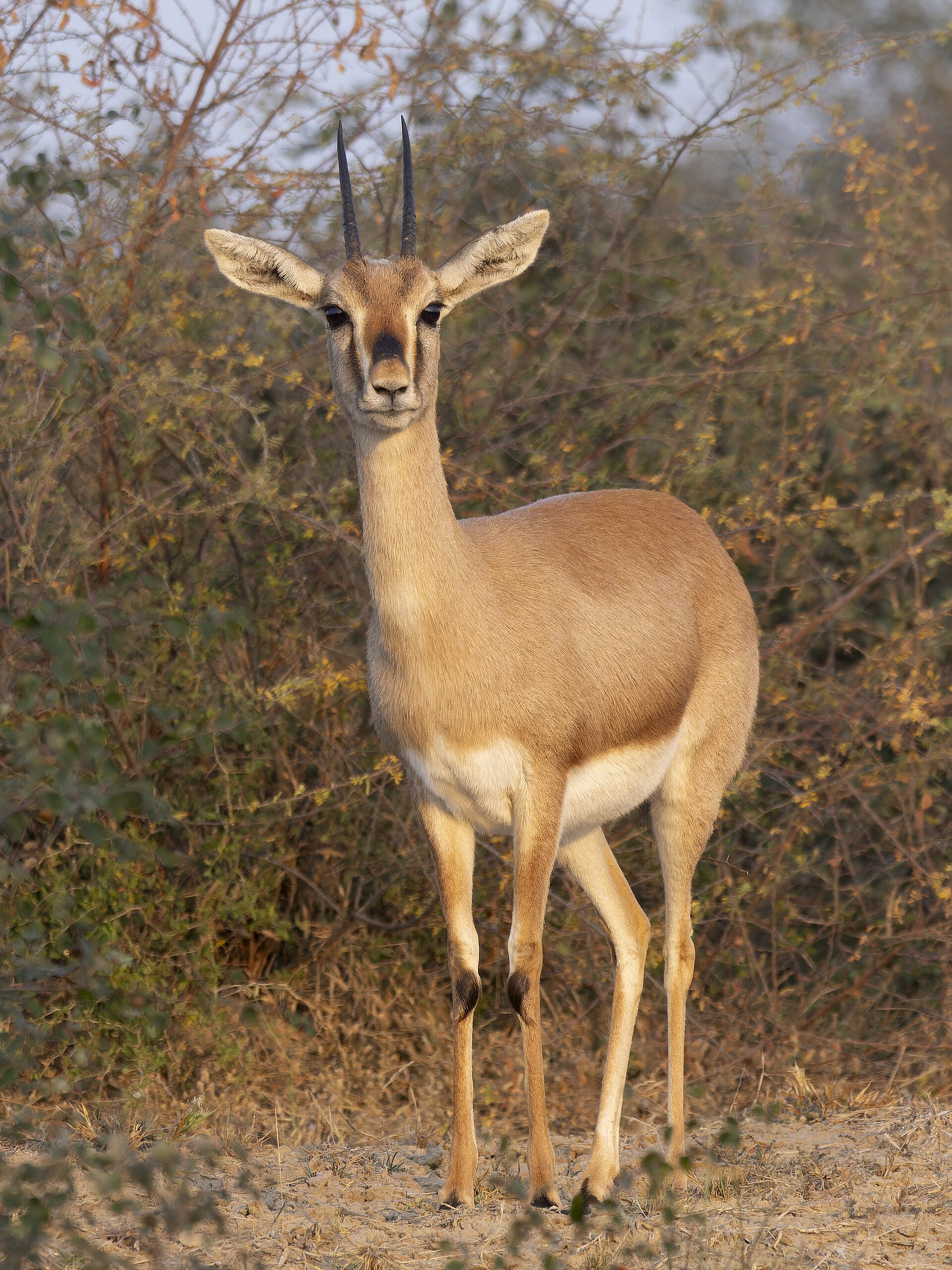
WII and NTCA lists for Mukundra include tiger, leopard, sloth bear, chital, sambar, nilgai, chinkara, jackal, jungle cat, langur and more. Portraits below are of those species. Sightings on the gypsy are never guaranteed.
You sit in an open Maruti Gypsy on authorised forest roads. A Forest Department guide reads pugmarks, alarm calls and water. You do not walk the core. You do not play calls. You do not feed animals.
Come in winter (October–March) for light and birds. Come in summer for waterhole watching if you can take the heat. In monsoon, confirm the gate — core tracks often close.
Explore safaris
01
Mukundra is long and narrow. Darrah, Daulatganj / Garadia and Ramganj Mandi serve different blocks. Use only the gate printed on your permit.
02
Carry government ID. Pay the live Forest fee. Board the gypsy with the allotted guide. Morning and evening slots are the working pattern.
03
Chital and langur alarms matter more than shouting for a tiger. The gorge views at Garadia are part of the same landscape — stay behind railings.
Maybe. Mukundra is a tiger-restoration landscape, not a guaranteed sighting park. Plan for leopard hills, deer, birds and the Chambal — treat a tiger as a gift.
Yes, in visitor pressure. The habitat is different: a long, narrow hill corridor rather than a famous core-zone circus. That is why Kota families come.
No. mukundrasafari.org is a visitor guide. Permits stay with the Rajasthan Forest Department. Call +91 744 250 2314.